The French Traveler

Guided Tours of France - Immersion Tours

  • Home
  • Paris Tours
    • Best of Paris tour
    • Best of Paris Registration
    • Holiday Magic in Paris
    • Holiday Magic in Paris Registration
  • Teachers: Eté 2026
    • Bonjour Chers Collegues
    • Eté 2026: Nantes Tour Schedule
    • Immersion Workshop Cost & Details Nantes 2026
    • Video: Immersion Tours for Teachers of French
    • Teacher Immersion Registration
  • Wine Tours
    • Sip and Savoir: A Wine Trip to Burgundy
    • Sip and Savoir Registration
  • About
  • Contact
  • Fbook

French Wine: Cabernet Sauvignon

February 26, 2012 by Valerie Sutter, Director, The French Traveler Leave a Comment

Red wine, anyone?

The Cabernet Sauvignon grape is practically synonymous with red wine, and where else to taste the best of the best, but in the Médoc and the Haut Médoc wine regions of Bordeaux, France.

Just near enough to the Gironde river, conditions here are perfect for what is known as one of the world’s finest wine grapes. Although the wine made from the Cabernet Sauvignon grape is astringent when young due to the tannin it contains, Cabernet wines mellow with age into that delicious, full-bodied taste we all know and love.
cabernet sauvignon

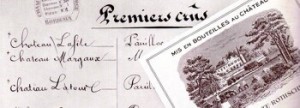
Some of the wines made at the famous Château Mouton-Rothschild in the Médoc use a very high percentage of Cabernet grapes – up to ninety percent! Located just outside the village of Pauillac, thirty miles to the north-west of Bordeaux, Mouton-Rothschild is a magnet for the red wine lover. No other vineyard in the Médoc uses more Cabernet Sauvignon than Mouton-Rothschild.

Besides tasting their delicious wine, visitors to the Château Mouton-Rothschild should not miss the wine museum with its collection of “all things wine,” going back to Roman times…

Thirsty yet?
Filed Under: French towns & villages, Wine

Bordeaux Wines

February 19, 2012 by Valerie Sutter, Director, The French Traveler Leave a Comment

Médoc, Graves, Entre-Deux-Mers, Pomerol, Sauternes, Saint-Emilion…. What do these poetic-sounding names have in common? You are right of course if you answered Bordeaux Wines! Bordeaux is the greatest wine-producing region of the world!

Bordeaux Wines

Located in the Aquitaine region of south-western France, Bordeaux is one of France’s largest cities with a population well over 200,000. It lies thirteen miles up the coast where the Garonne and Dordogne rivers meet, and Bordeaux’s great harbor bustles with maritime traffic from all over the world. It comes as no surprise that the name “Bordeaux” literally means: “beside the waters” (au bord des eaux).

This is one region of France that oenophiles (wine-lovers) will not want to miss, for Bordeaux wines offer something for everyone’s taste: from light, sophisticated red wines to robust, full-bodied ones, from dry white wines to luscious sweet whites, even sparkling rosés and whites produced à la méthode champenoise.

Visiting the famous vineyards of Bordeaux is a must for the thirsty traveler and makes for easy day excursions as they lie all around the city: Pomerol and Saint-Emilion to the east, Entre-Deux Mers to the southeast, Sauternes to the south, Graves to the southwest and west, and the Médoc and the Haut-Médoc to the northwest.

A votre santé!


Filed Under: French towns & villages, Wine

La Saint-Valentin in France

February 12, 2012 by Valerie Sutter, Director, The French Traveler Leave a Comment

St Valentine’s Day in France is celebrated widely. From silly gifts to flowers/chocolates/jewelry to exotic get-aways, the fête succitates joy, fun, and romance.

st valentine's day

Romantic dinners in restaurants abound, travel agents post signs of couple’s cruises, and lingerie shops have a field day. Whether one waits for it with great expectations (“What’s s/he going to do?”) or with trepidation (“What should I give him/her?”), St Valentine’s has a special meaning for each of us. The advice one gets in magazines in France is to not worry about it but…just participate. Here are a few paraphrased suggestions:

First of all, they suggest knowing what the other wants/expects. If you’re coupled up, one should be attentive to the needs and wants of one’s partner. Find out ahead of time what the expectations are; don’t be caught up short. It’s a bit like a mirror; one should reflect what the other is thinking/desiring.

There are always the classic gifts: perfume, jewels, flowers or plants, but also trendy gifts such as cooking or wine-tasting classes. It’s also an opportunity to take time out for the couple, to organize something you can do together…a nice dinner together in a special restaurant, a romantic couple’s massage, a spa day or weekend. And the small details count, as well: breakfast in bed, your turn to do the cleaning up or take baby out.

Most of all, St. Valentine’s should be fun and spontaneous. According to a recent survey, only 40% of French couples celebrate the day; the other 60% know that St. Valentine’s Day happens all year long.

Some recent figures:

  • 58.4% of French live together as couples
  • 39.5% of French couples celebrate la Saint Valentin;
  • 30% of French men intend to offer a gift of between 60-100 E for Valentine’s Day ($85-$140)
  • 8,7 = the number of times per month the French have sexual relations (both men and women)

Vive l’amour!

Filed Under: French customs & culture

Southern France, seen through film

February 5, 2012 by Valerie Sutter, Director, The French Traveler Leave a Comment

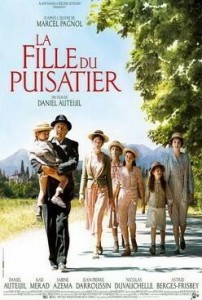
Daniel Auteuil’s 2011 French movie La Fille du Puisatier (The Well Digger’s Daughter) is to Southern France what Dany Boon’s Bienvenue Chez les Ch’tis (Welcome to the Sticks) is to the North. A remake of Pagnol’s 1940 film of the same name, Auteuil’s film was voted one of the ten most popular movies in France of 2011.

Just as Dany Boon, who is from the north of France, provided us with a glimpse into the quirky culture of Northern France in his blockbuster film, Daniel Auteuil, who grew up in Avignon, offers us the gorgeous landscape of the rural South and shows us the values of honor and integrity of the proud people who live there, in this, his first effort at directing.

southern francePlaying the well digger of the movie’s title, Auteuil gives a remarkable performance as a fiercely stubborn widower of a family of six daughters. Although marketed as a love story between his eldest daughter and the son of a wealthy shopkeeper who is called off to war, the film cleverly interweaves the themes of the complex bond between a father and his daughter, social inequity and class distinction, family honor, and the devastating effects of war.

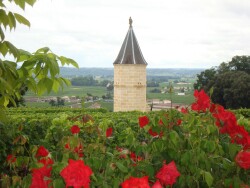
If watching Bienvenue Chez les Ch’tis made you want to visit Northern France (le nord), after seeing this touching story you will want to discover, or rediscover, the golden countryside of Provence, with its sing-song accents, magnificent weather, rolling hills and generous bounty. In the meantime, you can always revisit Auteuil’s magnificent interpretation of Ugolin in Claude Berri’s 1986 award-winning films, Jean de Florette and Manon des Sources, which also take place in hills of Provence. Le cercle est bouclé. We’ve come full circle.

French teachers : a useful link for activities to use in class around this film: http://www.lafilledupuisatier.com/LA-FILLE-DU-PUISATIER_Dossier-d-accompagnement.pdf

Filed Under: French films/films about France

Fete de la chandeleur, French crepe day!

January 30, 2012 by Valerie Sutter, Director, The French Traveler Leave a Comment

La Chandeleur: February 2nd

It’s crepe time in France! On February 2nd Americans have Groundhog Day; the French have…. la Chandeleur, or the fête des chandelles (candles) which translates as Candlemass in English, referring to the blessing of candles which traditionally took place on this day. For Roman Catholics, it’s the feast of the Presentation of the infant Jesus at the Temple, occurring forty days after Christmas. But the origin of the holiday is in fact pagan and today many traditions and superstitions are associated with it. Here are some fun things you can do to celebrate la Chandeleur with your friends and family (or French teachers: with your students!)

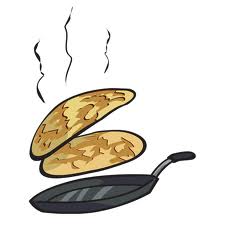
  • Have a crepe party and try your hand at flipping crepes ! Faire sauter des crêpes is something of an art form in France. For good luck, hold a coin in one hand and with the other, toss the crepe into the air when it’s time to cook it on the other side. If you manage to catch the crepe in the pan you will have good fortune in the coming year!
  • Enjoy the crepes with sugar, jam, chocolate, or Nutella.
  • The traditional drink to accompany crepes is hard apple cider (which can be replaced by sparkling apple cider sans alcohol!)
  • Create ambiance for this fête de la lumière by lighting candles around your house.
  • Learn the French rhyme: “Quand la Chandeleur est claire, l’hiver par derrière; Chandeleur couverte, quarante jours de perte!” (If February 2nd is clear, no more winter to fear; if the Chandeleur is overcast, forty days of winter to last).

la chandeleur

Bonne fête et bon appétit !


Filed Under: French customs & culture

Nord-Pas-De-Calais

January 20, 2012 by Valerie Sutter, Director, The French Traveler Leave a Comment

The north of France, specifically the department of Nord-Pas-de-Calais, has a character all its own. At least it appears that way to anyone who has seen the popular 2008 film by Dany Boon, Bienvenue chez les Ch’tis, whose title translates into English as Welcome to the Sticks. The movie tells the story of Philippe Abrams (played by Kad Merad), a post office manager in the glorious south of France, who gets caught impersonating the disabled in order to secure a cushy job on the French Riviera. As punishment, he gets transferred for two years to work in a small village in the north of France. Devastated by this forced change, Abrams, like most French southerners from the land of warm climes and rich cuisine, expects to find in the north a community of retarded coal miners existing in sub-zero temperatures who pronounce ‘a’ as ‘o’. He slowly warms to the dietary and dialectically challenged locals (notably Boon’s ingénue, Antoine) in this hilarious and tender comedy, which you will want to watch with subtitles in order to understand the northern dialect and accent. It will make you want to visit the north of France to see if it’s anything like the movie.

nord-pas-de-calaisActually, it is. The movie was filmed in the real village called Bergues, situated just a few miles south of Dunkirk. Here you can visit most of the places seen in the movie: the bell tower in the town square, the outdoor café where Philippe crashes his bike, the lingerie shop where Philippe runs into famous French actress Line Renaud (who plays Dany Boon’s mother in the movie), and the restaurant at which one of the funniest scenes in the movie takes place.

In this comedy about misconceptions, love and true friendship, Danny Boon gives us an enjoyable lesson in avoiding making assumptions about people. Boon himself is from this region and had wanted for years to display his home town as the warm, colorful region it really is. Just make sure to watch the movie first so you can learn a little about the local customs and get used to the dialect! The region is quite accessible by TGV (via Dunkirk or Lille).

Filed Under: French customs & culture, French towns & villages, Towns & villages

« Previous Page
Next Page »

Copyright © 2026 · Dynamik-Gen on Genesis Framework · WordPress · Log in