The French Traveler

Guided Tours of France - Immersion Tours

  • Home
  • Paris Tours
    • Best of Paris tour
    • Best of Paris Registration
    • Holiday Magic in Paris
    • Holiday Magic in Paris Registration
  • Teachers: Eté 2026
    • Bonjour Chers Collegues
    • Eté 2026: Nantes Tour Schedule
    • Immersion Workshop Cost & Details Nantes 2026
    • Video: Immersion Tours for Teachers of French
    • Teacher Immersion Registration
  • Wine Tours
    • Sip and Savoir: A Wine Trip to Burgundy
    • Sip and Savoir Registration
  • About
  • Contact
  • Fbook

Chocolat Menier

June 29, 2014 by Valerie Sutter, Director, The French Traveler Leave a Comment

Tourists to France and chocolate lovers everywhere know this beloved icon:  a little girl in a red and blue pinafore, writing on a
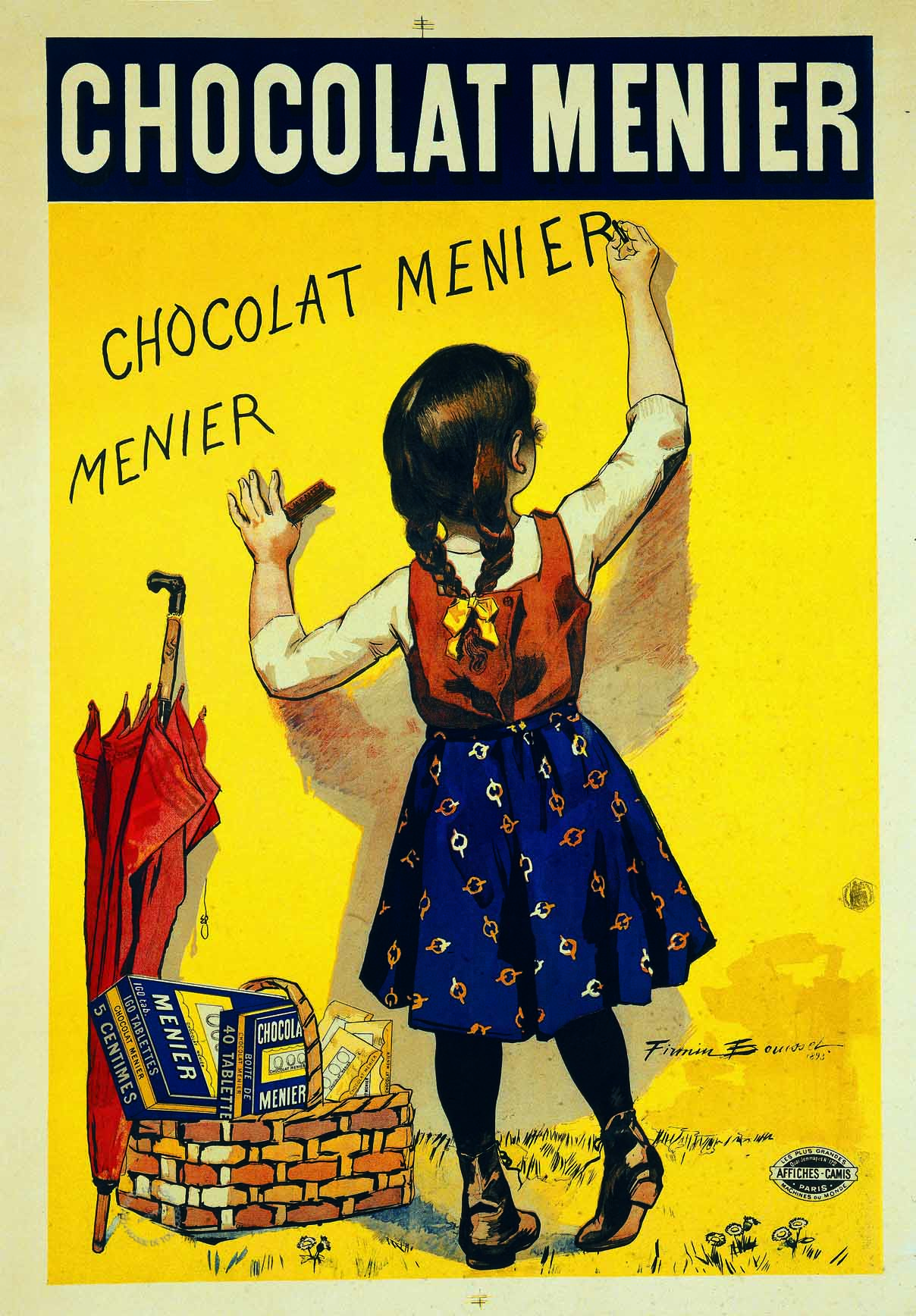
A beloved icon

A beloved icon

yellow wall using a piece of chocolate, advertising the brand, Menier chocolate.   This famous little figure turns up on candy tins, mugs, pitchers, posters and other artifacts, is a staple at flea markets and antique stores, and decorates many a wall worldwide.

Founded in 1816 by Antoine Brutus Menier, the Menier chocolate factory initially produced chocolate as a medicinal powder to coat the bitter tasting pills that Menier, a pharmacologist, sold.  Soon, however, the demand for the chocolate outpaced the medicines, so the Menier family purchased a small water mill in the town of Noisiel, twenty kilometers east of Paris, to produce cocoa powder.  The factory was revamped and modernized to facilitate assembly, and became the first factory in France to mass produce the powder by machines.
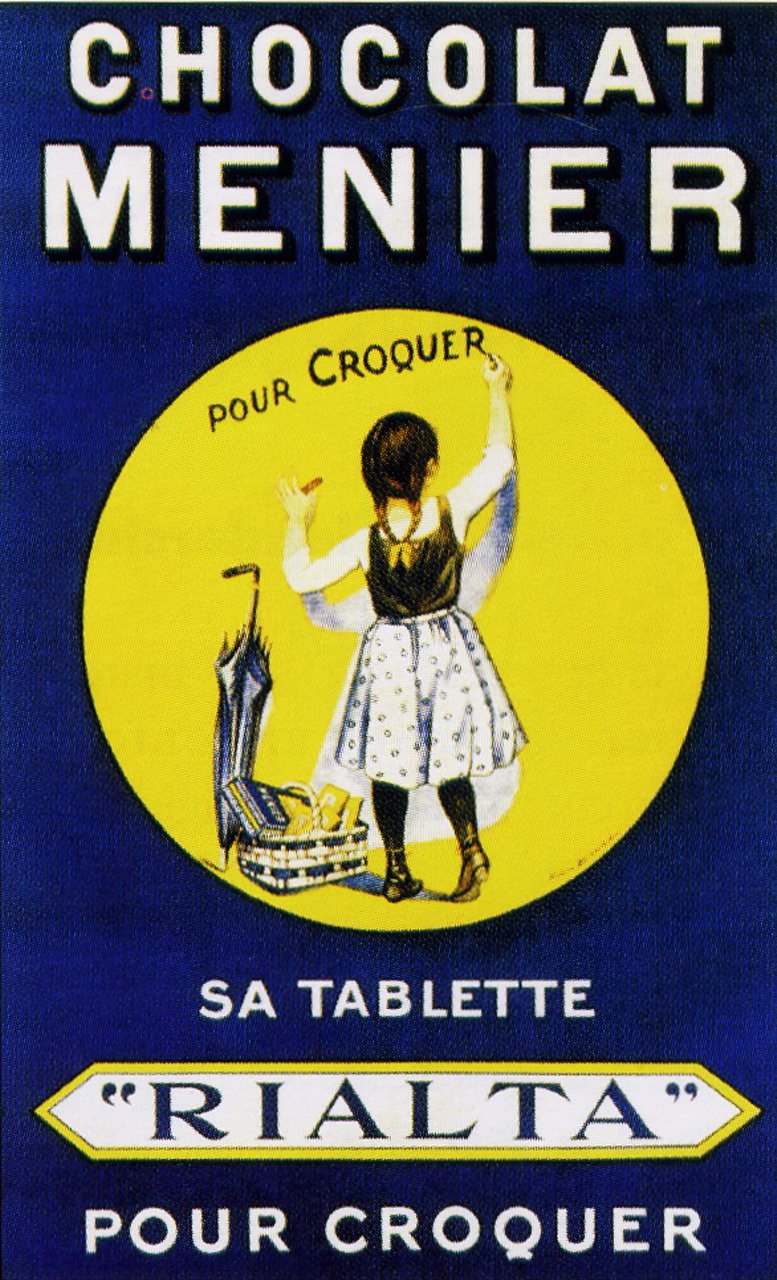
Chocolat MenierMenier then introduced blocks of chocolate (les tablettes) wrapped in yellow paper.  To keep up with production, the company began to concentrate on the exclusive production of chocolate products – it had cocoa growing estates in Nicaragua, sugar beet fields and a sugar refinery in the area of Roye, France.  Before long, the Menier Chocolate Company was the largest chocolate manufacturer in France, whose production necessitated a larger factory.

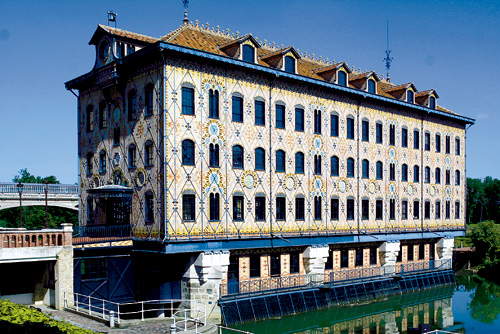
With the Industrial Revolution in full swing, the Menier factory revamped and extended the factory  in Noisiel with the newest materials, reflecting a boldness of design, considered today a National Heritage Site and is “one of the iconic buildings of the Industrial Revolution” (Archtectural Review, February 1997).

Resting on four stone piers that were sunk into the river bed, the chocolate factory is built on square hollow sections that feature an
Menier Chocolate Factory

Menier Chocolate Factory

exposed metal frame and diagonal pillar reinforcements that form a lattice. Yellow bricks filled in the latticework, some glazed to form cocoa flowers for decoration, others, when viewed from afar, formed the letter M.  Another building in the factory complex was designed and built by Gustave Eiffel for the Universal Exposition of 1898, taken apart and reassembled in Noisiel for the purpose of cooling the chocolate.  More additions to the plant were made later, including a major building that used reinforced concrete and was nicknamed “the Cathedral”.  One last innovation was the Pont Hardi, a 142 foot long concrete bridge that spans the Marne River, linking the new building to other parts of the complex.

At peak production around the turn of the 20th century, the chocolate factory employed over 1500 people, but World Wars I and II hurt production, and the Menier brand declined. Ultimately, the brand was sold to Nestlé S.A.  Nestlé’s French headquarters are housed in the main building of the Menier chocolate factory, while other parts of the original complex house a chocolate museum.   
Filed Under: Uncategorized

Politics à la française

April 11, 2014 by Valerie Sutter, Director, The French Traveler Leave a Comment

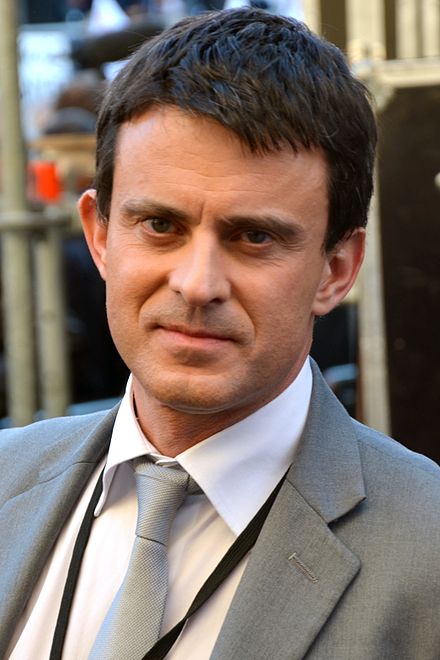
Last month, after disastrous results for the ruling party, France now has a new Prime Minister.  Manuel Valls, the former interior minister, was elevated to the position

Manual Valls, Prime Minister France

Manual Valls, Prime Minister France

after the resignation of Jean-Marc Ayrault.  How that happened is due to the way the French government is organized, which is semi-presidential.

What is a semi-presidential system?  It is one in which the president is elected by popular, or direct, vote in a two round process.  The President, whose term lasts five years, presides over the Cabinet, is the commander-in-chief of the armed forces, and settles treaties.  The President names the Prime Minister, who is in charge of running the government.  The PM is also responsible for the implementation of laws, can introduce bills in Parliament, and names the Cabinet.

Because the President is directly elected by popular vote, one can assume that he is supported by at least half of the voting population.  When the President and his political coalition control the Parliament, he names a Prime Minister from his party.  There is an assumption, therefore, that the President can push through his political agenda, although that is not always true.

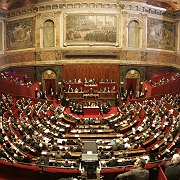
L'Assembly Nationale On the other hand, when political opponents of the President control the Parliament, the President names a Prime Minister who reflects the majority opinion, and who, in theory, promotes the opposition agenda.  When the President and Prime Minister are not of the same political ideaology, that situation is called cohabitation.  After the last set of mayoral elections, the Parti Socialiste lost several key cities to other political parties; change at the top was needed.

François Hollande and Manuel Valls are members of the same party, the Socialist Party & Radical Party of the Left (Parti socialiste – Parti radical de gauche), so there is no cohabitating.  But Manuel Valls is from the right wing of the Parti Socialiste, so he and the President are not quite on the same page.

The new Prime Minister was born in Barcelona, Spain and moved to France as a teenager.  He joined the Parti Socialiste at the age of 17.  After graduating from the University of Paris 1, Valls continued to be very active in the PS.  He has been compared to Great Britain’s Tony Blair in his political opinions, which include a ban on full-face veils in public, evicting Roma from illegal camps, and cracking down on youth crime.  He is often described as courageous, competent, and having deep convictions, and has criticized policies within his own party, characteristics that should serve him well in his new position.


Filed Under: Uncategorized

Provence tourism: Les Baux de Provence

March 8, 2014 by Valerie Sutter, Director, The French Traveler

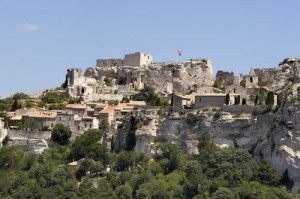
Les Baux in its picturesque setting

Les Baux in its picturesque setting

Les Baux-de-Provence is a commune, or township, in the Provence region of southern France.  It occupies a dominant position in the Alpilles mountain range.  The ruined remains of a castle sits on top of a rocky outcrop that looks out over the plains to the south.  The word “baux” refers to the prominent cliff of bauxite upon which the commune is located, discovered by geologist Pierre Berthier in 1821.

Historically, its defensive position atop the rocky outcrop encouraged inhabitants in Les Baux as far back as 6000 BC.  In the 2nd century BC, the village became the seat of one of the major Provençal families, which was subsequently deposed in the 12th century; Les Baux was  eventually incorporated into the newly-established country of France.  Les Baux was granted to the Grimaldi family of Monaco in 1642.  Although the town is French, the title of Marquis des Baux does remain with the Grimaldi family; Monaco’s Prince Albert II is the current Marquis.

Today, visitors come the Château des Beaux to see the remains of the castle, the medieval walls and the breathtaking view of the surrounding countryside.  The château-fortress also contains real sized medieval-style siege engines, including a catapult, covered battering ram, and a trebuchet, making for a fascinating visit for children and young adults.

After visiting les Baux, why not end the day with a glass of wine from the region?  The commune is also known for its red and rosé

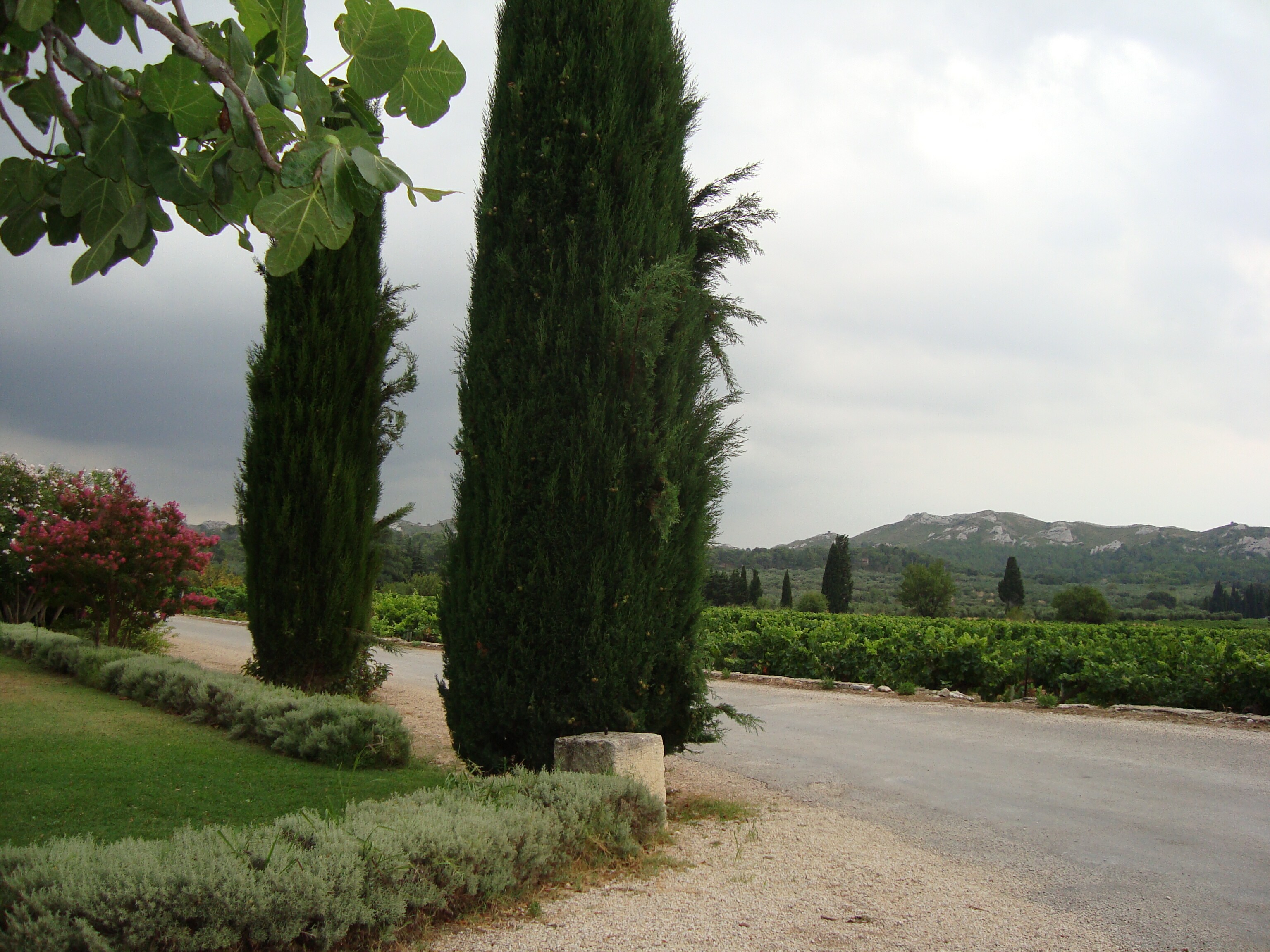
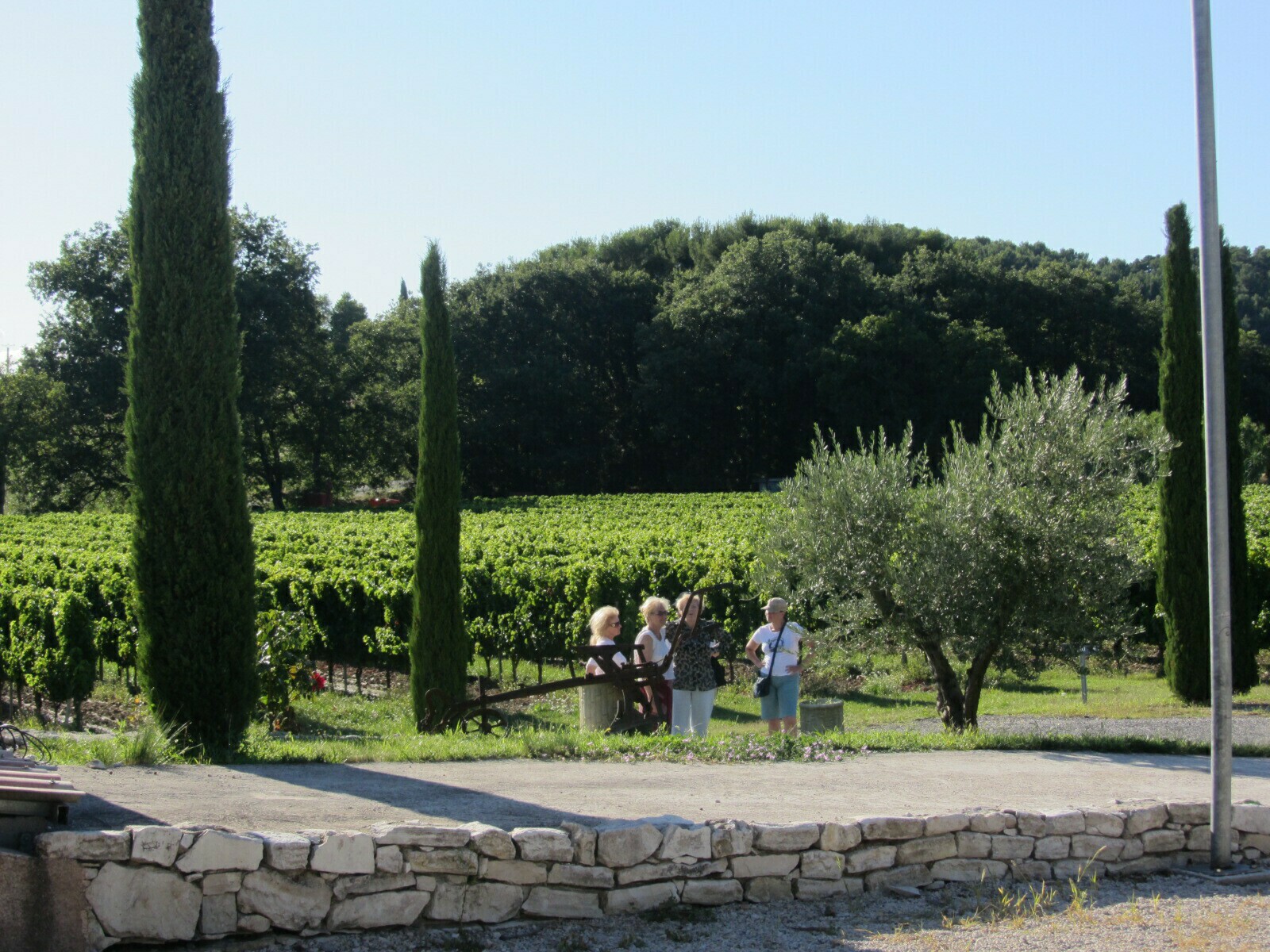
Vineyard: Le Mas de la Dame, at the foot of Les Baux

Vineyard: Le Mas de la Dame, at the foot of Les Baux

wines made from grenache, syrah and mourvedre grapes. The predominance of red, and recently white, wines is a rarity in the Provence region, more often reputed for its rosé wines.  The classic Baux de Provence wine is a deeply colored red with aromas of mountain herbs, black olives, violets and stewed blackberries.  Only 25% of the wines made in this area are rosé.  Les Baux earned AOC status in 1995, and was the first AOC to require that all vineyards be farmed organically.  Many of the producers in the area were already using organic methods to cultivate their grapes, which eliminated the use of chemicals that could be spread by the strong Mistral wind that dominates the region. Wineries in the area include Terres Blanches, Mas de la Dame, and Mas Sainte Berthe.

You’re sure to enjoy your visit to this unusual village.

For more information:

On the wineries mentioned:

http://www.masdeladame.com

http://www.massainteberthe.com

http://www.terresblanches.com

Wine of the region:

http://www.lesbauxdeprovence.com

On the Château of les Baux de Provence:

http://www.chateau-baux-provence.com

Filed Under: Uncategorized

Carnival in Nice

February 22, 2014 by Valerie Sutter, Director, The French Traveler

Mardi Gras, also known as Fat Tuesday, is a custom in many Catholic and Christian countries that marks the day before Ash Wednesday,  the 40-day period before Easter. On Mardi Gras, the tradition is to eat rich, fatty foods before starting the ritual fasting of the Lenten season.  Many cultures start Mardi Gras festivities way before the day itself; the Carnival season can start as early as Epiphany (January 6).

Carnaval (derived from carne levare – away with meat) is this time of celebration.  Historically, during Carnival season there were balls, parties in the streets, and excesses were tolerated.  Revelers wore masks to protect their identities while they participated wild activities in the days before Ash Wednesday.

In Nice, the season of Carnaval dates back to 1294, when the Count of Provence, Charles Anjou, spent the “joyous days of carnival” in the area, but it was in 1830 that the current form of the Nice Carnaval was born, when a parade consisting of about 30 carriages was organized in honor of King Charles-Felix and Queen Marie-Christine of Piedmont-Sardinia.

This year, the Carnaval in Nice started on February 14, and will end on March 4. During that time there are parades and parties.  The

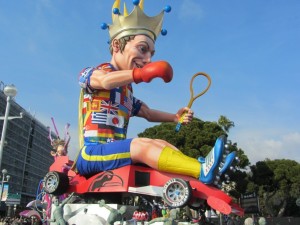
One of many floats in the Carnival

One of many floats in the Carnival

two main parades are the Flower parade and the Carnaval Parade of Lights.  Running down the Promenade des Anglais, the Flower Parade or “flower battle” showcases floats decorated with stunning floral compositions.  Beautifully dressed characters on the floats throw mimosas, gerberas, lilies and other flowers down to the spectators.  This year’s theme is Roi de Gastronomie, and the floats have titles such as Gastronomic Oppression (chefs race to keep Gargantua well fed), Crooks in Booze (a typical Frenchman clings to a bottle of champagne while others drink their favorite beverage) and the Nose (the dictatorship of the wine taster, who can destroy careers in a gulp)

Between the parades, there is plenty to do.  There is a Rock’n’Roll 10 mile run, and a Carnaval dip, where everyone is invited down to the beach to plunge into the Mediterranean.   Of course, since the theme is gastronomy, there are plenty of restaurants offering prix fixe meals that reflect the theme; if you have eaten too much, there is also a Zumba party to help you stay slim.  The Carnaval ends on Tuesday, March 4, with a parade in the afternoon, and the closing program at 9 pm that includes fireworks.  Then all is shut down, the streets are cleaned while the people get ready for Ash Wednesday and the somber period of Lent.

For more information on Nice Caranaval (to get ready for next year perhaps?):

http://www.nicecarnaval.com/

General information on Nice:

http://www.nicetourisme.com


Filed Under: Uncategorized

Paris: monuments of the historical axis

January 29, 2014 by Valerie Sutter, Director, The French Traveler

The highlight of many tourists in Paris is a stroll through the Tuileries Garden from the Louvre to the Place de la Concorde, then on down the Champs-Elysées to the Place Charles de Gaulle.  However, do many of them know that they are following the Triumphal Way, also known as the Historic Axis?

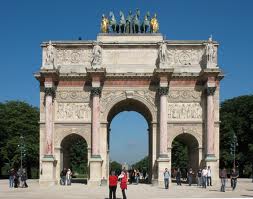
The Historical Axis starts and ends with arches.  At the eastern end of the axis, the Arc de Triomphe du Carrousel is one of two triumphal arches on the Way.  Located at the Louvre end of the Tuileries garden, it was built by Napoléon I, and modeled on the Arch of Constantine in Rome to celebrate the military might of the emperor.  Originally on the top of the Arc du Carrousel were the famous horses of Saint Mark’s Cathedral in Venice, Italy, which had been captured by Napoleon in 1798.  In 1815, this statuary was returned to Venice and was replaced in 1828 by a statue that commemorates the Restoration of the Bourbons after the fall of Napoléon.

Arch of the Carousel du Louvre

Arch of the Carousel du Louvre

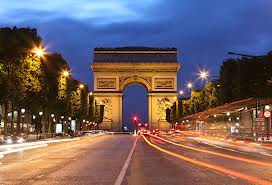
At the center of the historical axis is one of the most famous monuments in Paris, the Arc de Triomphe. Sitting in the center of the Place Charles de Gaulle, the Arc de Triomphe honors those who fought and died for France in the French Revolution and the Napoleonic Wars.  Also designed and commissioned by Napoleon in the same year at the Carousel arch, it took 30 years to build and was completed after his downfall.

Arc de Triomphe, Place Charles de Gaulle

Arc de Triomphe, Place Charles de Gaulle

There are names of all French victories and generals inscribed on its inner and outer surfaces, and beneath the vault lies the Tomb of the Unknown Soldier from World War I.  Inspired by the Roman Arch of Titus, the Arc de Triomphe was the largest triumphal arch in existence until 1982.  In 1919, Charles Godefroy flew through the center in a biplane.  A rallying point for French troops after successful military campaigns, the Arc has been the site of famous military marches and parades; the Germans marched around it in 1940 when they invaded Paris.  The Arc is also the starting point of the annual Bastille Day parade, celebrating French Independence Day on July 14.

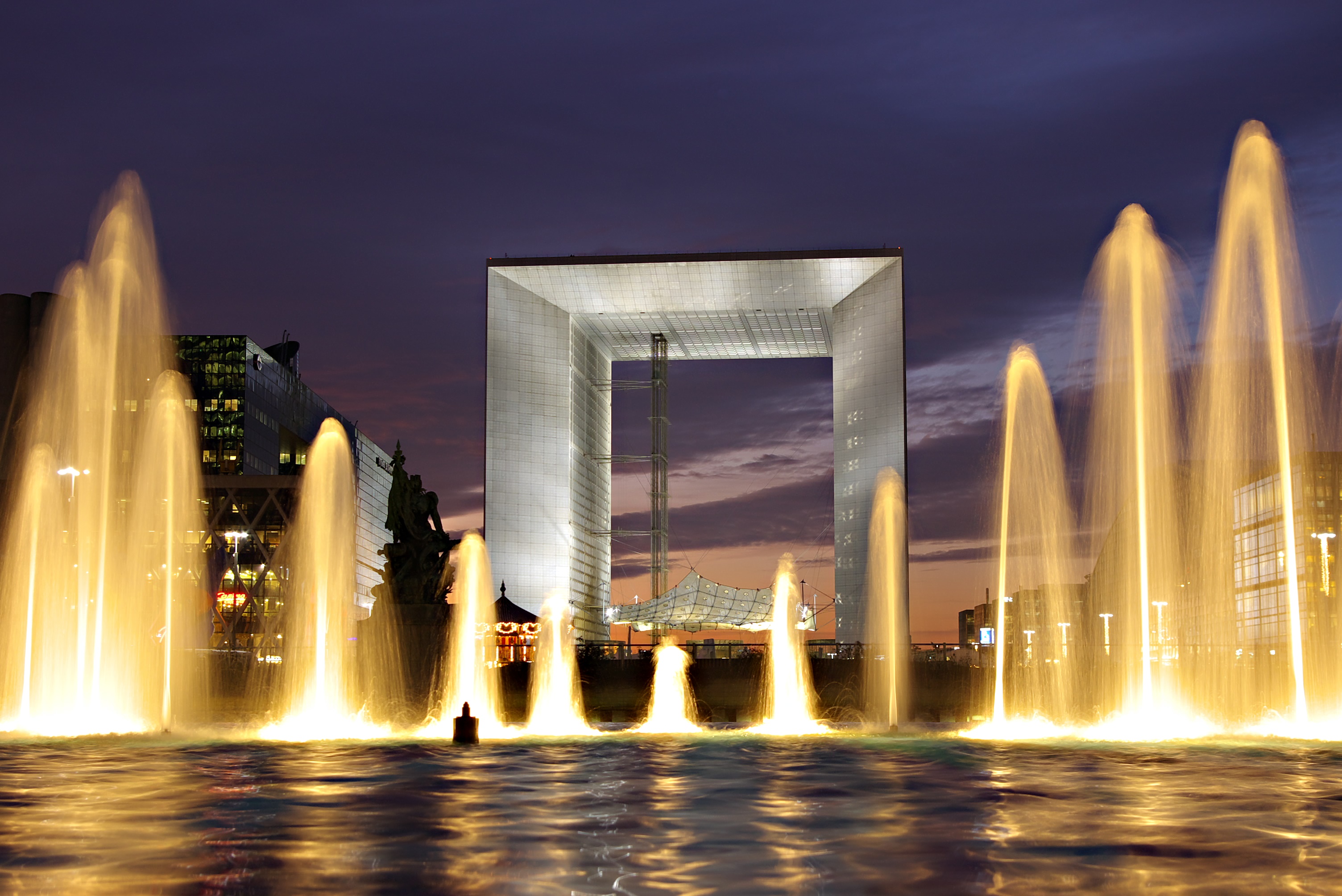
The youngest arch on the historical axis is the Grande Arche de la Défense.  It sits just outside the city limits of Paris in the Défense district.  The idea of the arch was initiated by then French president François Mitterand, and inaugurated in July 1989 to commemorate the 200th anniversary of the French Revolution.  Designed as an open cube, the Grande Arche stands for peace and humanitarian ideals instead of war victories. It is an actual functioning building, and houses many governmental offices.   It is easily accessible on the RER-A.

Grande Arche de la Defense

Grande Arche de la Defense


Filed Under: Paris Monuments, Traveling in France

Wines of Provence

January 18, 2014 by Valerie Sutter, Director, The French Traveler

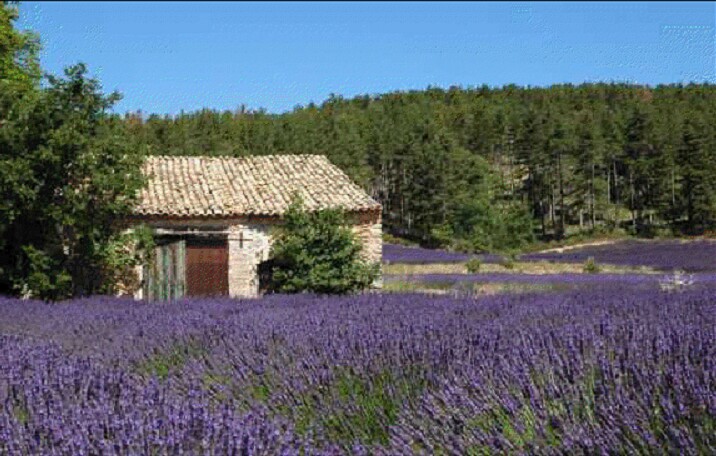
Provence is a popular region for tourists.  They flock to sites such as the Pont du Gard; the cities of Nîmes and Arles, and Avignon to see Roman ruins and the lavender fields.  However, the Provençal region is known for more than artists and architecture – it is also celebrated for its wines.

Vineyards & lavender fields = Provence

Vineyards & lavender fields = Provence

Provence has been producing wine since the Greeks founded the city of Marseilles. It contains eight major wine regions with AOC designations.  These regions produce red and white wine, but the most popular wine of the area is rosé.

Vineyard in Provence

Vineyard in Provence

Rosé is created in many of the AOC designated areas in Provence, but the Côtes de Provence AOC accounts for nearly 80% of this prolific region’s wine. Other regions in Provence are Coteaux d’Aix-en-Provence, Bandol, Cassis, Coteaux Varois.

Rosé is not a blend of red and white wine, but is made from red, black or purple grapes.  Provençal winemakers use the red grape varieties that are found in the region.  The main grape varieties found in this region are carignan, cinsaut, Grenache, mourdèvre and tibouren, as well as cabneret sauvignon and syrah.  What gives rosé its pink hue is the fact that rosé producers keep the grape skins in contact with the juice for only a brief time.  After that, the pink-tinted juice is drained from the skins.  Rosé is not just one color; the wine can range from a pale pink to a deeper shade of salmon or coral.  The flavor of rosé tends to be a more subtle version of the red wine varietals; one can taste strawberry, cherry, raspberry with some citrus and even watermelon.  This kind of wine is perfect for spring and summer, and is usually served chilled.

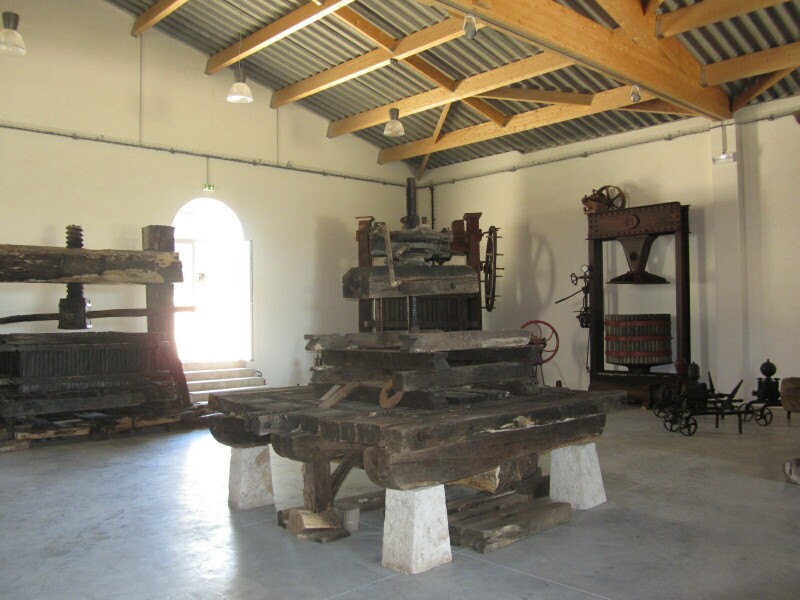
Wine museum at Chateau Turcan

Wine museum at Chateau Turcan

Now that you are in the Provençal region, you have found your appellation and now you want to drink it.  What goes well with rosé?  Well, almost anything!  Rosé can handle both the steak and seafood of a “surf and turf” entrée, and can also go with the sandwiches, fruit and salads that accompany a picnic.  Rosés can also go with a backyard barbecue.  Like spicy food?  Rosé can handle that, too, and pairs well with spicy meats and dishes.  And, if you’d like, you can have just a glass of rosé while you enjoy the sunset with friends.

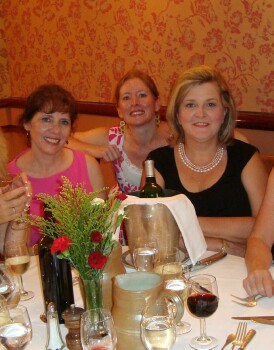
Enjoy a glass of wine with friends

Enjoy a glass of wine with friends

The next time you’re in Provence, make sure that you stop by to visit a winery in some of the AOC regions of the province.  Buy a bottle or two, visit the local charcuterie and boulangerie, and enjoy the how the flavors meld together as you eat.


For more information:

http://www.frenchtraveler.com/our-provence-wine-tour/

http://www.provencewineusa.com

www.buzzfeed.com/rachelysanders/what-you-need-to-know-about-rose-wine-facts

http://wine.about.com/

http://www.i-winereview.com/FoodWinePairingAdventures/1004rose.php

http://www.terroir-france.com/wine/provence.htm


Filed Under: French customs & culture, French food, Wine Tagged With: Provence, Provence France, wine, wine Provence, wine tours France

« Previous Page
Next Page »

Copyright © 2026 · Dynamik-Gen on Genesis Framework · WordPress · Log in