The French Traveler

Guided Tours of France - Immersion Tours

  • Home
  • Paris Tours
    • Best of Paris tour
    • Best of Paris Registration
    • Holiday Magic in Paris
    • Holiday Magic in Paris Registration
  • Teachers: Eté 2026
    • Bonjour Chers Collegues
    • Eté 2026: Nantes Tour Schedule
    • Immersion Workshop Cost & Details Nantes 2026
    • Video: Immersion Tours for Teachers of French
    • Teacher Immersion Registration
  • Wine Tours
    • Sip and Savoir: A Wine Trip to Burgundy
    • Sip and Savoir Registration
  • About
  • Contact
  • Fbook

Learning French: Le Petit Nicolas

October 8, 2011 by Valerie Sutter, Director, The French Traveler Leave a Comment

Le Petit Nicolas, for the young and young at heart

Whether you are learning French or teaching French, this delightful series portrays young Nicholas, a feisty young schoolboy from France who gives us a glimpse of French life in the 50s and 60s. With his group of quirky friends, Nicholas lands in all sorts of trouble – Dennis the Menace à la française.

  • Read the books, begun in 1959 by René Goscinny and Jean-Jacques Sempé which come in a series: Young Nicholas (Le petit Nicolas), Nicholas Again (Les récrés du petit Nicolas),Nicholas on Vacation (Les vacances du petit Nicolas),Nicholas and the Gang (Le petit Nicolas et les copains) andNicholas in Trouble (Le petit Nicolas a des ennuis). After the first one, you’ll be hooked!
  • Meet Nicolas’s friends: Alceste, his best friend; Clotaire, the class dunce; Rufus, the class trouble-maker; Eudes the class bully; and Agnan [Cuthbert in English], the teacher’s pet who you can’t punch in the nose because he wears glasses!
  • Watch the movie, Little Nicholas, by Laurent Tirard (2009), perfect for all ages, and just as hilarious as the books.
  • Enjoy the animated series (in French) by simply typing “Petit Nicolas” into YouTube and re-live many of Nicholas’ adventures as 12-minute cartoons. P.S. French teachers: Your students will love you!.
  • Download this 9-page learning pack in pdf format for ideas on using the film in class (pssst, profs de français!): http://www.ifecosse.org.uk/IMG/pdf/Le_Petit_Nicolas_learn

Filed Under: French films/films about France

Dispelling Some Myths About French & Americans

September 25, 2011 by Valerie Sutter, Director, The French Traveler Leave a Comment

Dispelling Some Myths about French & Americans

1) The French don’t like anyone who doesn’t speak French

False! The French are happy to show off their high school English when asked if they speak it. What they find offensive is when visitors to their country assume they speak English without first attempting a few words on French. Citizens of any country assume that incoming visitors will either learn the native language or at least make every attempt to master a few phrases when they arrive…and so, too, do the French. A simple sentence stammered out in French will get your question answered much more quickly and helpfully. If you master only one phrase in French, try « Excusez-moi, je ne parle pas français; parlez-vous anglais? »

2) French waiters are rude

False! Rather, French waiters don’t act like American waiters; they have a different set of cultural rules. Time spent by patrons in cafés is meant to be leisurely; you’re expected be there for a stretch.

So the waiter might take his time getting over to you. And since waiting tables in France is a profession, not a part-time job for college students, French waiters don’t tell you their name, nor do they announce that they’re happy to be your waiter for the evening, nor will they bring you your check until you ask for it. They’re there to take your order and bring you your food. Period. They don’t (usually) return to your table until the meal is over, and because they receive a salary independent of any tip you might care to leave, they don’t need to become your new best friend. So when your American sense of timing starts to raise your blood pressure as you wonder why your waiter hasn’t rushed over to your table, a winning smile and a friendly “Bonjour, Monsieur” will get you far better service than an angry stare or a frantic wave to induce them to come.

3) The French don’t like Americans

Au contraire! The French might not always agree with American politics, but they are usually quite charmed by [polite] American visitors to their country. They enjoy the American friendliness (which the French might dub as a certain naïveté), the indomitable spirit (unlike theirs, which is more tainted from centuries of warfare), and the profound American belief that anything is possible. They know it isn’t. So enjoy the French; they already like you. Just don’t bring up George Bush.

Filed Under: French customs & culture

Paris: Stuff Parisians Like

September 12, 2011 by Valerie Sutter, Director, The French Traveler Leave a Comment

Looking for some hilarious reading about Parisians, or perhaps trying to discover their secrets? Olivier Magny’s new book, Stuff Parisians Like, might give you some insights. Pour yourself a glass of wine and enjoy a good laugh with this excerpt, or better yet, have Olivier pour you one at his Parisian wine bar, O Chateau, and have a good laugh with him.

“For Parisians, having an expat friends displays fantastic ‘ouverture internationale’ and implies that the Parisian is both a gracious host and possibly a polyglot. Talking about his expat friend, the Parisian will always mention his nationality: ‘Tu sais, Mark, mon copain expat canadien.’ He will also make mention of the quality of his position: ‘Il a un très gros poste chez Microsoft … un type assez brillant vraiment.’ The Parisian will always compliment his expat friend publicly on his French: ‘Non, vraiment, il parle très bien. Non, c’est vrai Mark, tu as fait de gros progrès.’ The Parisian doesn’t think Mark’s French is any good but he likes to come across as the benevolent paternalist mentor.

Having an expat friend is about adding glow to the Parisian’s life. Not all countries come with the same glamorous touch. Having an American expat friend is the ultimate luxury, then comes South American, then other Anglo countries, then Italy. Having expat friends from any other country will only be acceptable in left-wing circles for whom the betrayal of having friends in the corporate world (losers) will be compensated by the unlikeliness of their country of origin.

Expats arriving in Paris are usually very keen to make Parisian friends and to work on their French. Soon enough, they give up on French and, not long after, on Parisians. Those who love the city enough end up re-creating a Parisian life with compatriots, other international folks and Parisians who have lived abroad long enough. Those who don’t just leave—disenchanted.

For Parisians with social ambitions, the quality of a social circle will be judged predominantly on the proportion of its internationals. The higher the proportion, the more desirable the circle. In this way, Parisians get a taste of adventure through their international friends. Between real job and real life, Parisians choose not to choose: they opt for real Parisian life.”


Filed Under: French customs & culture

Vive Asterix and the Kingdom of Gaul!

September 9, 2011 by Valerie Sutter, Director, The French Traveler Leave a Comment

Time to revisit The Adventures of Asterix, the comic book series written by René Goscinny and illustrated by cartoonist Albert Uderzo, a wonderful way to improve your French if you’re studying it, or a great tool to use in the classroom if you’re teaching it. The year is 50 BC and Gaul is entirely occupied by the Romans except for one Gaulish village, holding out against the invaders…. The main character is Asterix, the cunning, pint-sized warrior with superhuman strength which he gets from drinking the magic potion brewed by the old village druid, Getafix. His best friend is the enormous menhir-carrying Obelix whose favorite dish is wild boar and favorite activity, fighting Romans! Dogmatix is Obelix’s tiny dog and his constant companion. The village bard is named Cacofonix (!), and the village chief is Vitalstatistix. The book, Le tour de Gaule d’Astérix(Asterix and the Banquet, in English)can be read to learn about the geography and gastronomic culture of France. In this episode, Asterix and Obelix go on a tour of Gaul (France) and visit its main cities, collecting the culinary specialities from each region: Paris (ham), Reims (Champagne), Lyon (sausages), Nice (salade niçoise), Marseilles (bouillabaisse, or fish stew), Bordeaux (oysters and wine). Not only hilarious, but the puns in French will do wonders for your language skills! French actor Gerard Depardieu plays Obelix in three non-animated action movies : Asterix and Obelix Take on Caesar (1999), Asterix and Obelix : Mission Cleopatra (2002), and Asterix at the Olympic Games(2008). Amusez-vous!
Filed Under: French customs & culture

Paris discoveries: the Père Lachaise cemetery

August 27, 2011 by Valerie Sutter, Director, The French Traveler Leave a Comment

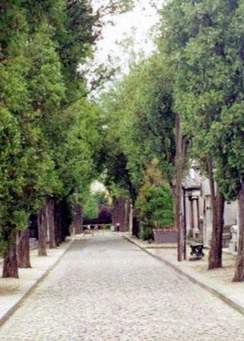
Morbidity aside, a trip to Paris wouldn’t be complete without visiting the Père Lachaise cemetery where many world-

Pere Lachaise cemetery

Pere Lachaise cemetery

famous people are buried. This is especially true if you enjoy French history and culture, since wandering amid the tombstones is a walk down history lane. You’ll even be given a map!

Buried here you’ll find quite an eclectic group of folks.

Actresses Simone Signoret and Sarah Bernhardt are here and actor-singer Yves Montand. So are Oscar Wilde, the British satirist, and Gertrude Stein, the American writer recently depicted in the film Midnight in Paris. You’ll find the graves of Romantic poets Alfred de Musset and Gérard de Nerval and those of Surrealists poets Guillaume Apollinaire and Paul Éluard. Other literary figures you’ll come across are Jean de la Fontaine, the well-known author of Les fables, and also

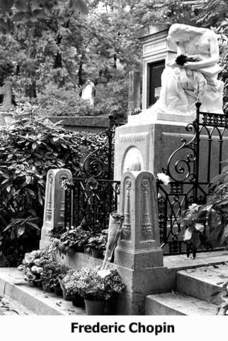
Pere Lachaise Chopin's grave

Pere Lachaise Chopin’s grave

Molière, Balzac, Proust and Colette. Victor Hugo is buried at the Panthéon but his father is buried here. Frédéric Chopin and Francis Poulenc are among the musicians at Père Lachaise, along with Edith Piaf. Many of the great French painters are buried here too, including Neo-classical painters David and Ingres, Romantic painters Théodore Géricault and Eugène Delacroix, as well as Gustave Caillebotte, who was one of the lesser-known Impressionists. You’ll even find Fulgance Bienvenüe, the father of theParis métro, and Ferdinand de Lesseps, the creator of theSuez canal. Talk about a history lesson!

Last but certainly not least, the Doors’ Jim Morrison, who died in Pari sin 1971, lies buried at the Père Lachaise and is still surrounded by his adoring fans.

Come, pay your respects, and may all these luminaries rest in peace.

If you’d like to know more, visit the Père Lachaise homepage.

Filed Under: French customs & culture

Literary Paris: The house of Balzac

August 25, 2011 by Valerie Sutter, Director, The French Traveler Leave a Comment

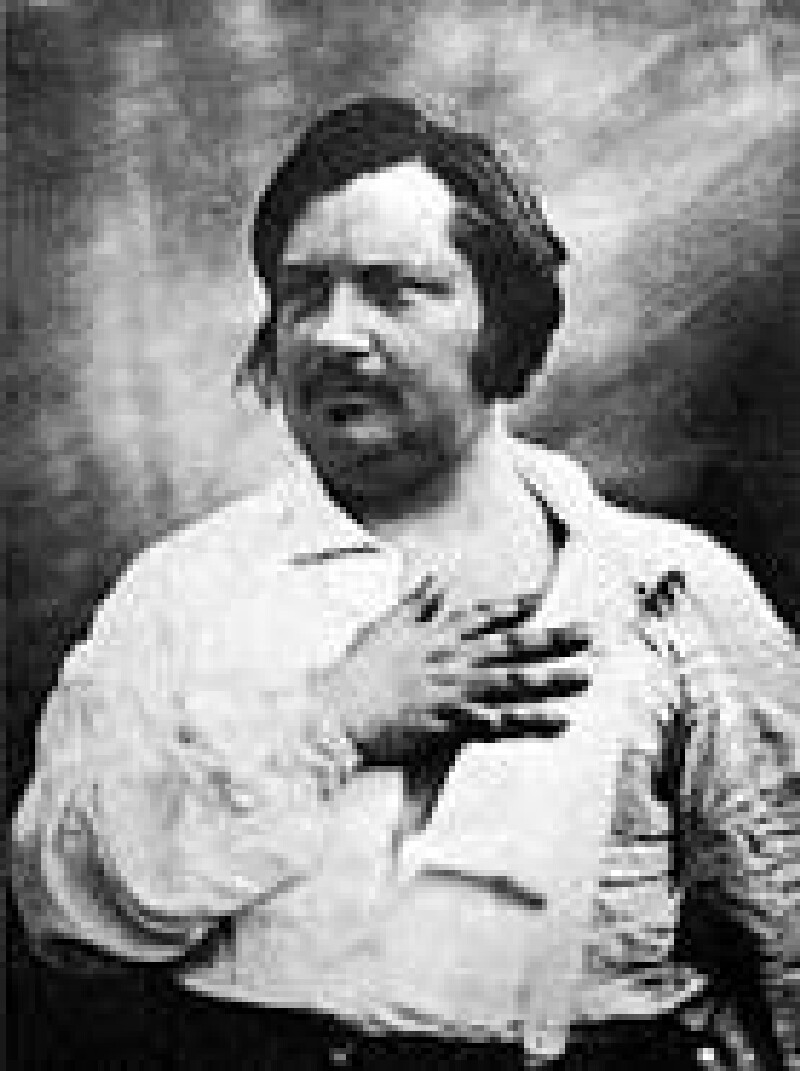
Honore de Balzac

Honore de Balzac

« Je tiens à une maison calme, entre cour et jardin, car c’est le nid, la coque, l’enveloppe de ma vie. » (“I need a house to be peaceful, between a courtyard and a garden, for it is the nest, the shell, the sheath of my life.”)

If you are inspired by French literary figures and wish to escape for a moment the bustling activity on your next tour of Paris, don’t miss a visit to La Maison de Balzac, 47 rue Raynouard, Métro Passy.

Located in the 6tharrondissement near the Eiffel Tower (on the other side of the Seine between the Palais deChaillot and the Maison de Radio France), this was where Balzac hid from his creditors between 1840 and 1847.

This house, now a literary museum and prominent research center, was also where this extremely prolific author worked non-stop: “To work means to wake up each evening at midnight, to write until eight o’clock, take a quarter of an hour for breakfast, work until five o’clock, have dinner, go to sleep and start again the next day.” In the well-preserved study you’ll see the small table on which Balzac wrote much of the Comédie Humaine. You’ll also find various personal objects belonging to the author such as his famous turquoise-encrusted walking cane and the ornamented coffee pot from which he served himself copious amounts of strong black coffee to keep him going through the night. Come and be inspired by one of the greatest literary giants the world has ever known. The tranquil, wooded garden will provide a welcomed rest as well.

Filed Under: French customs & culture

« Previous Page
Next Page »

Copyright © 2026 · Dynamik-Gen on Genesis Framework · WordPress · Log in